 Client Login

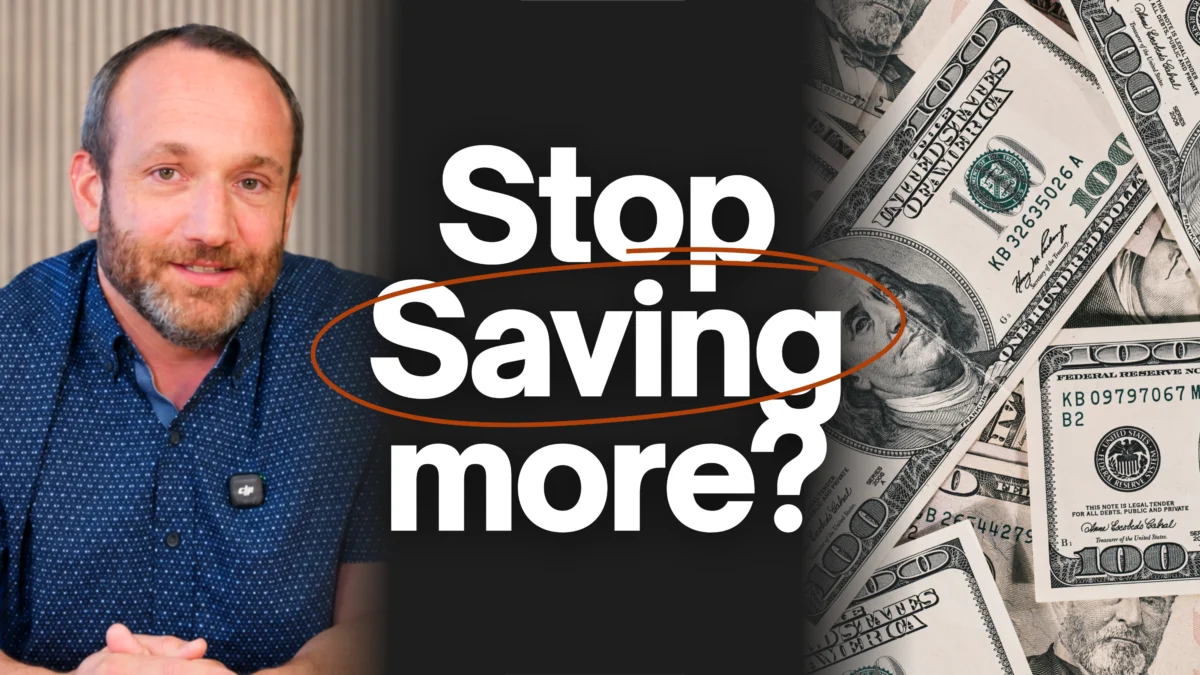
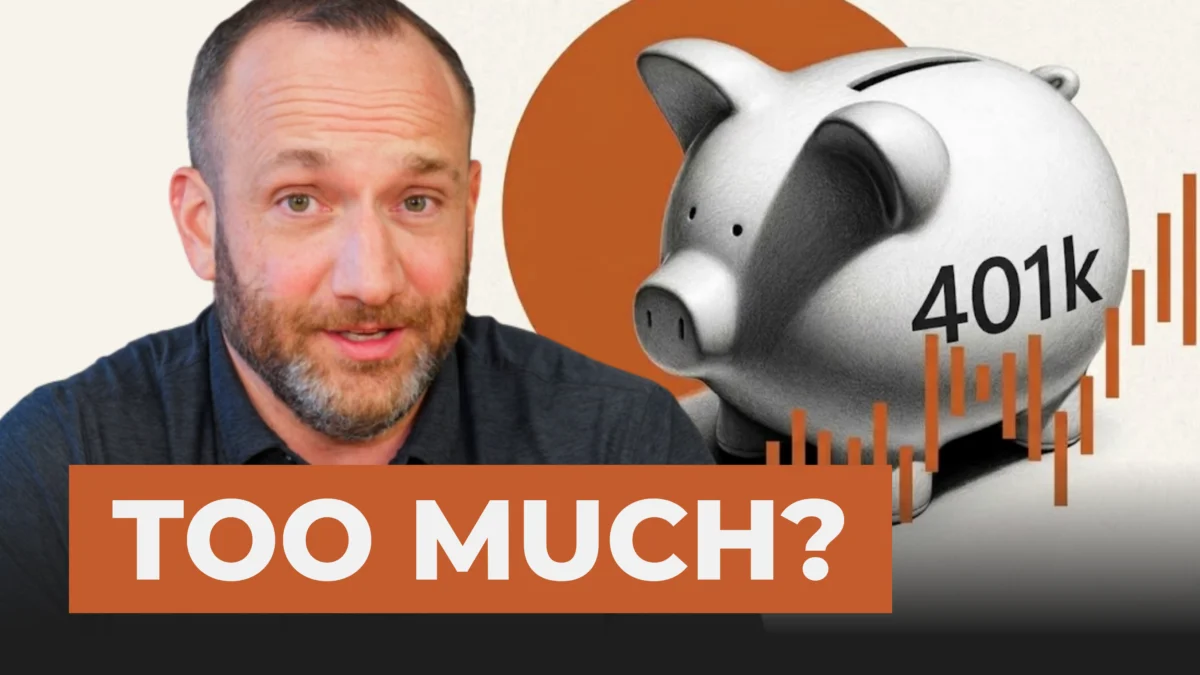
Saving for Retirement Is Only the First Step
For most of your working life, saving for retirement feels like the obvious priority. You earn money, contribute to your retirement accounts, invest consistently, and repeat the process year after year.
That strategy makes sense while you are building wealth. Eventually, though, something changes.
Your portfolio can reach a point where investment growth has a much larger impact on your future than the additional dollars you contribute each year. At that stage, continuing to save still has value, but other financial decisions may have a much greater effect on your retirement.
Taxes matter more. Investment risk carries bigger consequences. The timing of market returns becomes increasingly important. Even your own behavior can have a significant impact on whether your retirement strategy succeeds.
Here are five things that may matter more than simply saving more as your portfolio grows.
Keep reading, or if you prefer to listen or watch… check out the Podcast or full YouTube video.
1. The Growth of Your Portfolio
Early in your investing journey, your contributions drive much of your progress.
If you have $100,000 invested and contribute another $20,000, that contribution represents a significant percentage of your portfolio.
The equation starts to change as your investments grow.
Consider a hypothetical $2 million portfolio earning an average 7% annual return. That portfolio could generate approximately $140,000 in growth during the year. A $3 million portfolio at the same hypothetical return could grow by about $210,000.
At $5 million, a 7% return would equal approximately $350,000.
These numbers illustrate an important concept: eventually your existing investments may contribute more to your wealth than the money you add each year.
Of course, investment returns fluctuate, and no portfolio earns the same return every year. The point is not to expect 7% annually. Instead, recognize how the relationship between contributions and portfolio growth changes as your assets increase.
You could call this the crossover point.
Once you reach it, finding another way to save an extra $10,000 or $20,000 each year may not have the same impact it once did.
That does not mean you should stop saving for retirement. It means your financial strategy needs to evolve.
2. Tax Planning
As your wealth increases, taxes can become one of the biggest factors affecting your retirement.
Many people spend decades asking one question:
- How much more can I save?
A more valuable question may eventually become:
- How much of what I have built can I keep?
Retirement accounts also have contribution limits. You can only put so much into a 401(k), IRA, Roth IRA, HSA, and other tax-advantaged accounts each year.
Tax planning creates a different opportunity.
Imagine that thoughtful tax strategies allow someone with substantial assets to reduce their annual tax burden by even 1% of their portfolio value. On a $2 million portfolio, 1% equals $20,000.
Keeping an additional $20,000 invested rather than losing it unnecessarily to taxes can create a meaningful difference over decades.
That is why retirement planning should eventually move beyond contributions.
Your strategy may need to consider questions such as:
- Which accounts should you draw from first?
- When could a Roth conversion make sense?
- How might required minimum distributions affect your taxes later?
- How will Social Security, pensions, investment income, and retirement withdrawals interact?
- Could realizing income in one year reduce taxes in future years?
Saving builds the portfolio. Tax planning helps you preserve more of it.
3. Asset Allocation
Asset allocation can feel relatively abstract when your portfolio is small. It feels very different when you have accumulated several million dollars.
A major market decline on a $100,000 portfolio may hurt emotionally, but a similar percentage decline on a multimillion-dollar portfolio can represent hundreds of thousands or even millions of dollars.
That makes the amount of investment risk you take increasingly important.
Suppose someone reaches retirement with a $2 million portfolio invested aggressively because stocks performed well during the previous several years. If the stock market experiences a major decline, that investor could suddenly find themselves facing retirement with far fewer assets than expected.
The problem is not that stocks are inherently bad or that investors should avoid market risk. It comes from holding a portfolio that does not match your situation.
Your asset allocation should reflect three primary factors:
- Your time horizon. How soon will you need the money?
- Your risk tolerance. How much volatility can you handle without abandoning your strategy?
- Your financial goals. What does your portfolio actually need to accomplish?
Someone who will not touch their investments for 25 years has different needs than someone planning to retire next year.
Once your portfolio becomes substantial, the goal should not simply be maximizing returns.
You need the right amount of risk for the retirement you want.
4. Sequence of Returns Risk
Two retirees can earn the exact same average investment return and experience dramatically different outcomes.
Why?
Because the order in which those returns occur matters. This concept is known as sequence of returns risk.
Imagine saving for retirement, then retiring immediately before a major market decline. Your investments fall at the same time you begin withdrawing money to pay for retirement.
Now you face two forces working against the portfolio.
The market has reduced the value of your investments, and you are selling some of those investments to fund your lifestyle.
Those withdrawals leave fewer assets available to participate when the market eventually recovers.
Someone who experiences strong returns during their first several years of retirement may have a completely different outcome, even if both investors eventually earn similar average returns over a longer period.
That makes withdrawal planning essential.
Before retirement, you should know where your income will come from if markets decline.
A diversified account structure can help. Depending on your circumstances, you may have assets across traditional retirement accounts, Roth accounts, and taxable brokerage accounts.
Those different buckets can provide flexibility when markets or tax conditions change.
The goal is not to predict the next downturn. Nobody knows exactly when one will occur.
A better strategy prepares for the possibility before it happens.
5. Your Own Behavior
One of the greatest risks to a retirement portfolio may not come from taxes or the stock market. It may come from the investor.
When markets rise, investors often feel confident.
They may decide they can tolerate more risk. Some increase their stock exposure because recent returns look attractive.
Then the market falls.
Fear replaces confidence remarkably quickly.
Suddenly, the same investor who planned to “buy the dip” wants to sell everything.
Behavioral mistakes can create lasting financial consequences.
Investors commonly fall into patterns such as:
- Chasing investments after strong performance
- Selling during market declines
- Constantly changing investment strategies
- Taking more risk after markets rise
- Becoming overly conservative after markets fall
- Trying to predict short-term market movements
A strong retirement plan creates guardrails before emotions take over.
You decide how your portfolio should work while markets are calm. You establish rules for withdrawals, rebalancing, and risk management before volatility arrives.
Working with a financial professional can also add another layer of accountability. Sometimes having someone between you and a major financial decision helps prevent an emotional reaction from becoming an expensive mistake.
Saving for Retirement Is Only the First Phase
Saving for retirement remains important. But accumulating money represents only one part of a successful retirement strategy.
As your portfolio grows, your financial priorities should evolve with it.
Eventually, the bigger questions become:
- How should your investments be structured?
- What amount of risk should you take?
- How can you manage taxes?
- Where will retirement income come from during a market decline?
- How can you prevent emotional decisions from derailing decades of work?
Those decisions may ultimately have a greater impact than squeezing another few thousand dollars into your portfolio each year.
The strategy that helped you build wealth does not automatically become the strategy that helps you preserve it.
The Bottom Line
There comes a point when saving for retirement becomes less about how much more you can contribute and more about how effectively you manage what you have already accumulated.
Portfolio growth begins doing more of the heavy lifting. Tax decisions become increasingly valuable. Asset allocation carries greater consequences. Sequence of returns risk becomes real as retirement approaches, and behavioral mistakes can undo years of disciplined investing.
That is when retirement planning needs to become more intentional.
You worked hard to build your portfolio. The next step is making sure your money, tax strategy, investments, and retirement income plan work together.
If you have built a substantial portfolio and want a second opinion on your retirement strategy, schedule a conversation with the Bonfire Financial team. We can review where you are today, identify potential gaps, and help you determine what needs to happen next.