 Client Login

By 2033, Social Security benefits are projected to be reduced by about 25%. That’s not speculation, that’s straight from the Social Security Administration.
And if nothing changes long term, those cuts could get even worse. That matters more than most people realize.
If you’re expecting $2,000 a month, a 25% reduction brings that down to $1,500. That’s $6,000 a year gone. For many retirees, that’s the difference between feeling stable and feeling stressed every single month.
Here’s the part most people miss: Your Social Security benefit is not fixed.
There are real, practical moves you can make right now that can increase what you receive for the rest of your life. Below are five of the most impactful strategies to help you get the most out of what you’ve earned.
Keep reading, or if you prefer to listen or watch… check out the Podcast or full YouTube video.
First, How Social Security Actually Works
Before we get into the strategies, it helps to understand how your benefit is calculated.
Every paycheck you’ve earned included a 6.2% contribution to Social Security (your employer matched it). Over time, that adds up.
When it’s time to calculate your benefit, the government:
- Adjusts your earnings for inflation
- Takes your 35 highest earning years
- Averages them out over 420 months
- Runs that number through a formula to determine your monthly benefit
That final number is called your Primary Insurance Amount (PIA), which is what you receive at full retirement age.
Everything you’re about to read either increases or decreases that number.
1. Work at Least 35 Years
This is one of the most overlooked factors.
If you don’t have 35 working years, Social Security doesn’t adjust the formula. It still divides by 420 months, which means missing years show up as zeros.
Those zeros drag your average down, and that lowers your benefit permanently.
The fix doesn’t have to be extreme. Even part-time work or side income in later years can replace a zero with a real number, and that can increase your monthly benefit more than you might expect.
2. Replace Low-Earning Years
Even if you already have 35 years, you’re not done.
Your benefit is based on your highest 35 years. That means lower-earning years still bring your average down.
If you’re earning more now than you did earlier in your career, continuing to work can replace those lower-income years with higher ones.
For example, replacing a $20,000 earning year with a $100,000 year can meaningfully increase your average and your future benefit.
Before stepping back or retiring early, it’s worth understanding what that decision could cost you long term.
3. Delay Filing (If It Makes Sense)
This is one of the most powerful strategies available.
You can start collecting Social Security at age 62, but there’s a trade-off:
- You’ll lose about 6% per year you claim early
- That reduction is permanent
On the flip side:
- For every year you delay past full retirement age (up to 70), your benefit increases by about 8% per year
That can add up quickly.
A benefit of $2,300 at full retirement age could grow to nearly $2,900 by waiting a few years. And since Social Security adjusts for inflation, that higher base compounds over time.
This isn’t a one-size-fits-all decision. Health, income needs, and life expectancy all matter. But if you’re able to delay, it’s often one of the most effective ways to increase your lifetime benefit.
4. Coordinate Spousal Benefits
If you’re married, this is where strategy really matters.
Social Security isn’t just an individual decision; it’s a joint one.
A lower-earning spouse can receive up to 50% of the higher earner’s benefit, but timing is critical. Claiming early reduces that amount.
There’s also an important long-term consideration:
When one spouse passes away, the surviving spouse keeps the higher of the two benefits.
That means the higher earner’s decision about when to file doesn’t just affect them, it can directly impact their spouse’s financial security for the rest of their life.
Coordinating your strategy as a couple can make a significant difference.
5. Check Your Earnings Record
This might be the most underrated strategy on the list.
The Social Security Administration has acknowledged that billions of dollars in wages have gone unmatched to the correct records.
If your earnings history is wrong, your benefit could be lower than it should be, and you may never know unless you check.
Here’s what to do:
- Create an account at SSA.gov
- Review your earnings history year by year
- Compare with old W-2s or tax returns if something looks off
Fixing an error could increase your monthly benefit for the rest of your life, and it might only take 30 minutes to catch.
Why This Matters More Than Ever
Over 40% of retirees rely on Social Security as their primary source of income. Even for those with savings, it often forms the foundation of a retirement plan. Small decisions made today can have a six-figure impact over time.
The five strategies are simple:
- Work 35 years if possible
- Replace lower-earning years
- Delay filing when it makes sense
- Coordinate with your spouse
- Check your earnings record
None of these are complicated, but they do require awareness and intentional planning.
The Bottom Line
You’ve been paying into Social Security your entire working life.
It’s worth taking the time to understand how it works and making sure you’re getting everything you’ve earned.
Most people spend more time planning a vacation than they do planning this.
That’s a mistake you can avoid.
Next Steps.
If you want to look at your specific situation and figure out the right Social Security strategy for you, that’s exactly what we do. At Bonfire Financial, we help you coordinate your taxes, investments, and income into one clear plan so you can move forward with confidence.
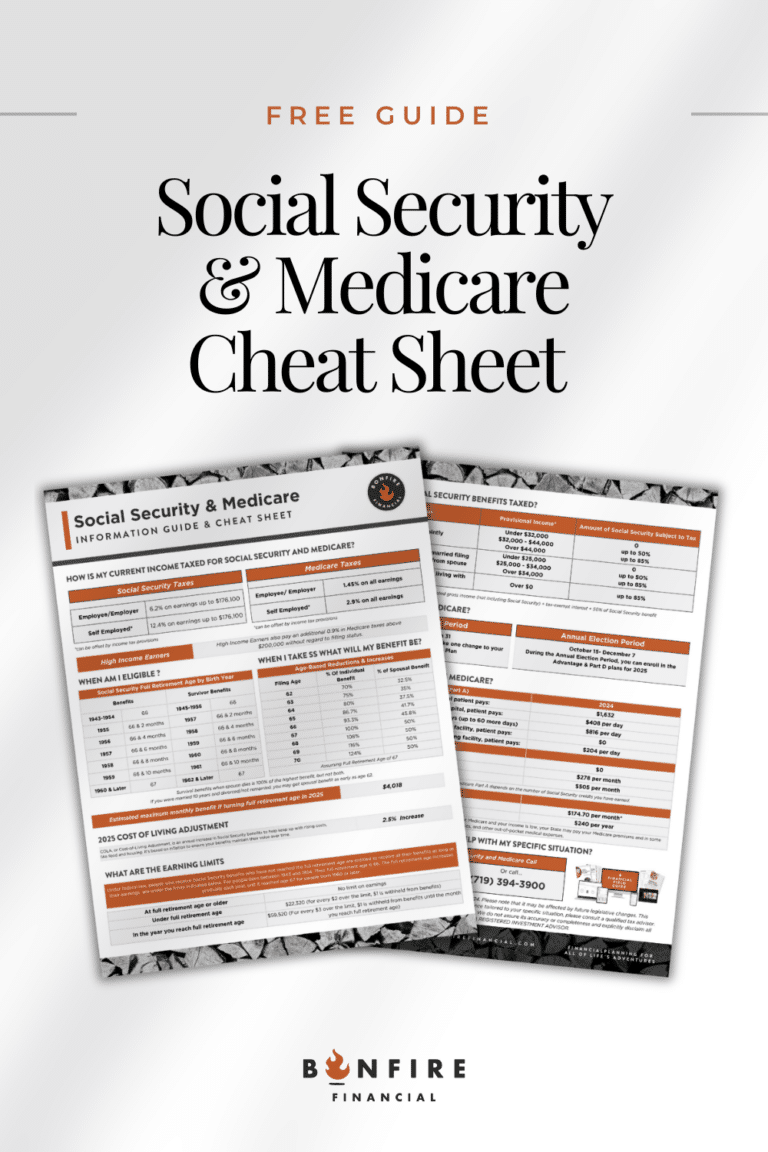
Before you make any decisions, grab our free Social Security Cheat Sheet with the updated 2026 numbers. It’s a quick, easy reference that breaks down when to claim, how benefits are calculated, and the key thresholds you need to know. Download it and make sure you’re not leaving money on the table.