 Client Login
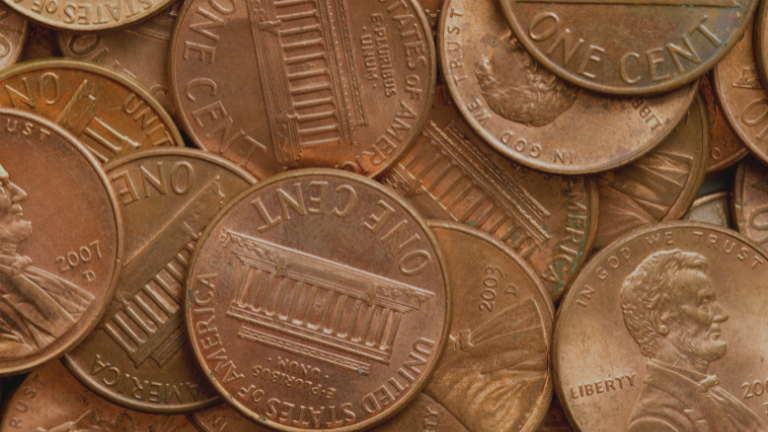
The future of money is changing. The penny has officially met its end. For the first time since 1793, the United States minted its final one-cent coin. While the penny may be small, what it represents is anything but. The decision to stop producing the penny is a perfect example of how money changes, adapts, and evolves as society evolves. It is a reminder that the things we consider permanent are sometimes anything but.
Today we will explore what the death of the penny means, why it happened, and how this simple moment fits into a much larger story about the future of money.
If you care about what is happening with your money, how it might change over the coming years, and what steps you can take now to stay ahead, you are in the right place.
Listen Now: iTunes | Spotify | iHeartRadio | Amazon Music
RIP Penny: What it means for the future of money
On November 12, 2025 the United States Mint produced the very last penny that will ever be stamped in America. For most people, this news might pass by without much thought. After all, how often do any of us use a penny anymore? You might have a few sitting in a junk drawer or rattling around in your car console. You might occasionally dump them into a Coinstar machine if you still keep a jar of change. But when is the last time you paid for something using pennies?
The truth is simple. The penny has stopped matching the world we live in.
Here are the key facts that led to its demise:
It costs more to make a penny than it is worth.
The United States government spent about four cents to create one penny. That is a losing proposition from every direction, especially in a world with rising national debt and rising costs of production.
Stopping penny production saves real money.
Estimates show that discontinuing the penny will save the government up to 56 million dollars annually. That is not a small number.
Its practical use is nearly zero.
Most Americans do not use pennies in everyday transactions. Retailers increasingly round to the nearest five cents. Cash payments are dropping. Digital transactions have taken over.
Inflation eliminated its buying power.
There was a time when a penny could buy something. There was a time when five or ten cents could get you into a movie theater. Today, a penny does not buy anything. Inflation has slowly erased its value.
All of this makes the penny a symbol. Its retirement is not just a cost cutting measure. It is a sign that money is changing and the systems around money are changing with it. It is the perfect starting point for a larger conversation about the future of money.
Looking Back: A Short History of the Penny and Why It Lasted So Long
The United States penny began in 1793. That means it survived through the birth of the country, the Civil War, the Industrial Revolution, the rise of automobiles, the invention of the internet, and countless cultural and technological shifts.
So why did the penny persist for so long?
Tradition
Americans love tradition. The penny is familiar. It reminds people of childhood piggy banks, luck, sayings, and small rituals like picking up a penny for good fortune.
Habit
Once a system is in place, it often stays in place simply because change is uncomfortable or inconvenient.
Sentiment
Abraham Lincoln sits on the face of the penny. There was resistance for decades from people who felt strongly about maintaining a coin representing such an influential historical figure.
Inertia
Government decisions are slow, and the process of adjusting currency systems takes time.
Despite all of that, the economics finally won. If something costs more to produce than it is worth, eventually the math forces the conversation. Inflation and rising material costs made this inevitable.
The penny had a long, respectable run, but the world moved faster than it could.
The Symbolism Behind the End: What It Reveals About the Future of Money
Removing the penny is not just a financial decision. It is a window into something much bigger. The future of money is not fixed. It is not stationary. It is evolving constantly, and we are in the middle of one of the biggest financial transitions in modern history.
Money has always changed forms:
• It started with bartering
• Then came precious metals
• Then came coins
• Then paper money
• Then checks and cards
• Then online banking
• Now digital payments
• And finally, digital assets and cryptocurrencies
The end of the penny is one more chapter in that story.
It signals a turning point. We are slowly leaving behind the age of physical currency. Coins and paper are becoming less central to everyday life. Cash is still useful in some situations, but most people rarely carry it.
Instead, most transactions happen through:
• Cards
• Phones
• Online platforms
• Digital wallets
• Bank transfers
• Crypto exchanges
• Peer to peer payment apps
The penny is disappearing because the world that required physical currency is disappearing with it.
Inflation, Value, and What a Penny Used to Mean
One reason the penny became irrelevant is inflation. In 1910, a penny could buy something. In 1940, a handful of pennies could buy a soda. In 1960, kids bought candy with pennies. But each decade pushed the buying power of one cent lower and lower.
Inflation is a slow, sometimes invisible force. It pushes the cost of everything upward and pushes the purchasing power of currency downward.
The penny is a real world example, visible to everyone, of what inflation does over time. As money changes, as prices move, and as society advances, currency must adapt.
This idea is central to understanding the future of money.
- Inflation forces evolution.
- Technology accelerates evolution.
- Consumer behavior seals it.
The penny became a victim of all three.
The Real Cost of Creating Money and Why Efficiency Matters
Most people never think about the cost of producing currency. It feels like something that simply exists. But physical money requires real materials, real labor, and real energy. Coins require metal and manufacturing. Paper money requires printing and distribution.
When the cost of creating a unit of currency exceeds its value, a problem emerges. The penny is the clearest example of that economic mismatch.
For decades, economists pointed out how wasteful the penny was. Each year, millions of dollars were poured into production even though the coin contributed nothing useful to the economy.
Ending penny production is a perfect case study in financial efficiency. If something is not working, not useful, and unnecessarily expensive, it eventually needs to be removed.
This same logic applies when thinking about the evolution of digital money. Efficiency matters. That principle drives innovation in everything from payment systems to cryptocurrencies.
Rounding Up, Rounding Down, and Daily Life Without Pennies
Will daily life change without pennies? Probably not much.
Many other countries stopped using one cent coins and transitioned smoothly:
• Canada
• Australia
• New Zealand
• Several European countries
Retailers simply round up or down to the nearest five cents during cash transactions. Digital payments remain exact.
Studies show that rounding neither helps nor harms consumers overall. It averages out and becomes an invisible part of pricing.
The reality is simple. Most people will not even notice that pennies are gone.
The symbolic meaning, however, is noticeable. It is one more reminder that we are quietly moving into a new era of money. The future of money is becoming lighter, faster, and more digital.
From Silver Coins to Clipped Edges: A Story of Money Changing Throughout History
Before the penny became too expensive to produce, there were other times in history when money had to evolve.
For example, certain coins have ridges along the edges. These ridges were originally created to prevent people from clipping off small pieces of precious metal. When coins were made from silver or gold, some people shaved tiny amounts off the edges, collected them, and still spent the full coin.
The ridges stopped that.
It is a small detail that reveals something important. Whenever money is valuable, people will find creative ways to manipulate it. Whenever money is vulnerable, systems must adapt.
Money never stays the same.
Coins were eventually made from cheaper materials. Paper money replaced large amounts of metal. Credit cards replaced wallets full of cash. Digital payments replaced checks. QR codes are replacing swipe machines.
Every major shift happened because something became inefficient or outdated. The penny is simply the next example.
The Digital Revolution: How Technology Is Redefining the Future of Money
The biggest force shaping the future of money is technology.
Technology made payments faster, simpler, safer, and more immediate. Today we can transfer money across the world in seconds. We can buy groceries without touching a keypad. We can invest without calling a broker. We can check account balances from our phone.
Here are the major digital shifts happening now:
1. Mobile wallets are becoming the standard.
Apple Pay, Google Pay, Samsung Pay. Millions of people no longer reach for a wallet at all.
2. Peer to peer payments are normal.
Zelle, Venmo, Cash App. Splitting dinner bills has never been easier.
3. Online banking has taken over.
Branches are closing because the demand simply is not there.
4. Cards are becoming contactless.
Tap to pay is now more common than inserting a chip.
5. International transfers are cheaper and faster.
Digital platforms outperform banks.
6. Cryptocurrencies introduced a new model of value exchange.
Bitcoin created a decentralized store of value. Stablecoins introduced digital currency that can mimic the dollar.
7. Businesses accept digital payments automatically.
Whether you are paying rent, buying a coffee, or ordering from Amazon, you rarely use cash.
All of this leads to one conclusion. The penny was not built for this world. Physical coins were not built for the pace of modern money. The future of money is digital because life is digital.
Bitcoin, Crypto, and Why They Matter in the Conversation About Money
You cannot talk about the evolution of money without talking about Bitcoin.
Bitcoin is not just a digital currency. It is a new way of thinking about value. It introduced the idea of currency that does not rely on a government, does not inflate endlessly, and cannot be counterfeited.
This does not mean every cryptocurrency has value. In fact, many are questionable. But Bitcoin introduced the idea of digital scarcity. It created a decentralized network where no government or company controls the system.
So what does Bitcoin have to do with the penny?
Both reveal the same truth. Money is always evolving. The penny shows how physical money is becoming outdated. Bitcoin shows where some parts of money may be heading next.
More people are becoming open to digital assets. Large institutions are adopting Bitcoin as part of their investment strategy. Younger generations are growing up with digital payment systems instead of physical cash. In many ways, Bitcoin is not a futuristic idea anymore. It is part of the financial present.
For anyone thinking about the future, understanding Bitcoin is becoming essential.
Why the Dollar Is Not Backed by Gold and Why That Matters
For many decades, the United States dollar was backed by gold. That meant every dollar represented a specific amount of gold stored in a vault. In 1971, the United States ended the gold standard. From that point forward, the dollar became what is known as a fiat currency.
Fiat currency gets its value from the belief that the government guarantees it. The dollar is worth one dollar simply because the United States says it is. This system works, but it also means the government can print more money in response to economic needs.
Printing more money can help during recessions, stimulate the economy, and fund government programs. But it also creates inflation, which reduces purchasing power over time.
This is another reason the penny lost value. Inflation gradually erased its buying power until it became useless.
Understanding this helps us understand why people are curious about digital currencies like Bitcoin. Bitcoin cannot be printed or inflated. There is a fixed supply, which is why people sometimes refer to it as digital gold. Whether Bitcoin becomes a permanent part of the financial system or not, it represents a pushback against inflation and an alternative to fiat currency systems.
This is one more element shaping the Future of Money.
How Financial Behavior Is Changing and What It Means for Your Wallet
Consumers are changing the way they interact with money. These changes have serious implications for the future.
Cash is fading.
Many people simply do not carry cash anymore.
People expect instant access.
Real time banking and instant transfers are becoming standard.
Consumers prefer automation.
Automatic bills, automatic savings, automatic investing.
People want transparency.
They want to know where their money is and how it is working for them.
Digital tools are improving literacy.
Apps that track spending, budgeting systems, and investment platforms have made financial education more accessible.
All of these trends push financial systems to evolve. The penny could not survive this new environment. Other parts of the financial world will evolve too. The Future of Money will be shaped by convenience, technology, and consumer expectations.
How Businesses Are Preparing for a Less Physical Future
Companies are deeply aware of the direction money is moving. The rise of digital payments has changed how retailers operate.
Here are the biggest shifts businesses are making:
• Installing tap to pay systems
• Reducing cash registers
• Increasing automated checkout
• Adding QR code payments
• Offering online payment portals
• Exploring blockchain based invoicing
• Reducing the cost of cash handling
• Rounding prices to eliminate coin dependency
These changes make commerce faster and more efficient. They also make the penny unnecessary.
Businesses will continue moving toward digital systems because digital systems cost less and function better.
The Fear of Change and Why New Money Systems Feel Scary
Most people are not afraid of losing the penny. But many people are uneasy about digital money, cryptocurrencies, and newer financial technologies.
This is normal.
History shows that anything unfamiliar creates discomfort. When credit cards were invented, people distrusted them. When online banking began, people worried it was unsafe. When mobile banking started, many questioned whether it would last.
Eventually these technologies became everyday life.
The Future of Money will follow the same pattern. At first it feels unfamiliar. Then it feels optional. Then it becomes normal. The key is to stay educated and stay aware. The more familiar something becomes, the less intimidating it feels.
What You Can Do Now: Preparing for the Future of Money
You do not need to become an expert in crypto or technology to prepare for the future. But you should become proactive.
Here are the most important steps you can take:
1. Update your financial tools.
Use banking apps, digital payment systems, and modern budgeting tools.
2. Understand inflation.
Know how inflation affects your money and long term savings.
3. Explore digital assets responsibly.
You do not need to invest in crypto, but you should understand it.
4. Diversify your investments.
A mix of assets prepares you for a changing financial landscape.
5. Review your long term plan.
The future will look different. Your plan should adapt.
6. Stay informed.
Financial literacy is your greatest asset in a changing world.
At Bonfire Financial, we believe the best way to approach the Future of Money is with clarity, confidence, and strategy. Our clients come to us because they want to stay ahead rather than be surprised later.
Final Thoughts: What the End of the Penny Teaches Us
The penny is a reminder that nothing in finance is permanent. The systems we use today will not be the systems we use forever. Money evolves because the world evolves.
The end of the penny teaches us three important lessons:
1. Efficiency always wins.
If something costs more than it is worth, it eventually disappears.
2. Technology is shaping the next era of money.
Digital systems are not the future. They are the present.
3. The best way to prepare is to stay educated.
Understanding how money works will always put you ahead.
As we move into a more digital world, the Future of Money will continue to unfold in ways that surprise us. Whether it is the rise of Bitcoin, the decline of coins and cash, or the growth of digital payment ecosystems, one thing is certain: change is happening.
The end of the penny is not the end of money. It is the beginning of the next chapter.
Bonfire Financial is here to guide you through every chapter with clarity, confidence, and customized planning that makes sense for your life.
>> If you are ready to understand what comes next and position yourself for the future, reach out and schedule a call with us today. The future is coming either way. It is better to walk into it prepared.