
Should You Pay Off Your Mortgage or Invest? (What Actually Makes Sense)

Should You Pay Off Your Mortgage or Invest?

It’s one of the most common financial questions out there:

Should you pay off your mortgage… or invest your money?

On the surface, it feels like there should be a clear, right answer. Pay off debt and be safe. Or invest and grow your wealth.

But that’s not how money actually works.

The truth is, this isn’t really a math problem. It’s a decision shaped by tradeoffs, behavior, timing, and your personal situation. And the reason this question feels so big is because people think they have to get it perfect.

They don’t.

In fact, trying to make the perfect decision is often what keeps people stuck.

Let’s break this down the right way.

Keep reading, or if you prefer to listen or watch…check out the Podcast or full YouTube video.

Why This Decision Feels So Big

For most people, their home is their largest asset.

It’s not just a financial decision. It’s emotional. It’s tied to security, identity, and stability.

So when someone asks, “Should I pay this off?” what they’re really asking is:

  • Am I making a mistake if I don’t?
  • Am I missing out if I do?
  • What if I choose wrong and can’t recover?

That fear tends to get stronger over time.

When you’re younger, mistakes feel fixable. You’re working, you have income, and time is on your side. But as you get closer to retirement, the margin for error feels smaller.

There’s no paycheck coming in to fix things. That’s where the pressure comes from. And ironically, that pressure is what makes people worse with money.

The Problem With Trying to Make the “Perfect” Decision

Most people approach money like there’s a single correct move.

There isn’t.

Money is not a test with one right answer. It’s a series of decisions over time, each with tradeoffs.

When you start believing there’s a perfect choice, a few things happen:

  • You overthink everything
  • You hesitate to act
  • You beat yourself up over small mistakes
  • You lose perspective on what actually matters

You end up stuck in a loop of “what if.”

What if I invest and the market drops?
What if I pay off my mortgage and miss out on gains?
What if I choose wrong?

Here’s the reality:
Most financial decisions are not catastrophic.

They only become catastrophic when:

  • You go all-in on a bad decision
  • You ignore risk
  • Or you let emotion drive the process

This is where a better framework matters.

Money Isn’t About Perfection. It’s About Tradeoffs.

Every financial decision is a tradeoff.

If you put extra money toward your mortgage, you’re:

  • Reducing debt
  • Lowering future expenses
  • Increasing security

But you’re also:

  • Giving up liquidity
  • Potentially missing investment growth
  • Locking money into an illiquid asset

If you invest instead, you’re:

  • Keeping your money working
  • Maintaining flexibility
  • Potentially growing wealth faster

But you’re also:

  • Taking on market risk
  • Keeping your debt longer
  • Living with more uncertainty

There is no version where you win everything.

So the real question isn’t:

“Which is better?”

It’s:

“Which tradeoff makes the most sense for me?”

The Math Behind It

Let’s simplify this. The biggest factor in this decision is your mortgage interest rate.

Scenario 1: Low Interest Rate Mortgage (2–4%)

If you have a mortgage in the 2–4% range, you’re in a unique position.

Even very conservative investments, like:

…can often generate similar or higher returns than your mortgage rate.

That means:

  • You could invest your extra money
  • Earn 4% (for example)
  • While your mortgage only costs you 3%

That difference, even if small, works in your favor.

Your money is doing more by staying invested than by paying off the loan.

And that’s before even considering:

  • Stock market returns
  • Long-term compounding
  • Inflation working against your fixed-rate debt

In this scenario, paying off your mortgage early is usually not the most efficient move from a pure financial standpoint.

Scenario 2: Higher Interest Rate Mortgage (5–7%+)

Now flip it. If your mortgage rate is 5%, 6%, or higher, the math starts to shift.

Why?

Because now:

  • Paying off your mortgage is like earning a guaranteed 5–7% return
  • That return is risk-free
  • And it directly reduces your expenses

To match that return through investing, you’d have to:

  • Take on more risk
  • Deal with volatility
  • Accept uncertainty

So in higher-rate environments, paying down your mortgage becomes much more attractive. Not because it’s always the best move, but because the tradeoff changes.

The One Thing Most People Miss

Here’s where people get this wrong.

They assume this decision is purely about returns.

It’s not. It’s about behavior.

Let’s say someone invests instead of paying off their mortgage.

That only works if:

  • They actually invest the money consistently
  • They don’t panic and sell
  • They don’t spend it instead

On the flip side, paying off a mortgage forces discipline.

You’re:

  • Building equity
  • Reducing debt
  • Locking in a guaranteed outcome

So the better option depends on what you will actually do, not what looks best on paper.

The “Vegas Rule” for Investing

A simple way to think about risk is this: Only take risks you can afford to lose.

Think about going to Vegas.

The people who walk away happy are the ones who:

  • Set a limit
  • Stick to it
  • Treat it like entertainment

The ones who get into trouble:

  • Chase losses
  • Double down
  • Ignore the plan

Investing works the same way.

If you’re going to take risk:

  • Keep it within a reasonable portion of your net worth
  • Don’t bet everything on one outcome
  • Don’t let one decision derail your entire plan

This is especially important as you get older.

You don’t need to hit home runs. You just need to avoid strikeouts.

Why Paying Off Your Mortgage Feels So Good

There’s a reason people love the idea of being debt-free.

It’s not just financial. It’s psychological.

  • No monthly payment
  • Lower fixed expenses
  • Greater sense of control
  • Less stress

In retirement, this matters even more.

Without a mortgage:

  • Your lifestyle becomes easier to maintain
  • Your required income drops
  • Your financial plan becomes simpler

But there’s a catch.

The Hidden Limitation of Home Equity

Your home may be your biggest asset.

But it’s not very useful for cash flow.

You can’t:

  • Use it at the grocery store
  • Easily tap it without selling or borrowing
  • Rely on it for day-to-day expenses

So while paying off your mortgage increases your net worth…

…it doesn’t necessarily increase your ability to fund your lifestyle.

That’s why a balanced approach matters.

The Real Risk: Living Beyond Your Means

If there’s one thing that consistently causes problems, it’s not this decision. It’s lifestyle creep.

Spending beyond your means, over time, will break any plan.

  • It doesn’t matter if you invest
  • It doesn’t matter if you pay off your house
  • It doesn’t matter how much you earn

If your lifestyle keeps expanding faster than your resources, you’ll eventually run into trouble.

The goal isn’t to maximize every dollar.

It’s to build a lifestyle that:

  • You can sustain
  • You actually enjoy
  • And doesn’t depend on perfect outcomes

How to Think About This in Real Life

Let’s simplify this into something practical.

Step 1: Eliminate Bad Debt

Before anything else:

  • Pay off credit cards
  • Avoid high-interest consumer debt

If you’re paying 15–25% interest, that’s the priority.

No investment reliably beats that.

Step 2: Build an Emergency Fund

You need liquidity.

A solid emergency fund:

  • Covers 3–6 months of expenses
  • Protects you from unexpected events
  • Keeps you from making bad decisions under pressure

And most importantly, if you use it, you replenish it.

Step 3: Automate Your Future

If you’re working:

  • Max out retirement accounts where possible
  • Make investing automatic
  • Remove decision fatigue

Once your future is handled and automated, everything else becomes easier.

Step 4: Decide Based on Your Situation

Now you can ask the real question:

  • What’s my mortgage rate?
  • What’s my risk tolerance?
  • What would help me sleep better at night?
  • What will I actually follow through on?

For some people:

  • Investing will make more sense

For others:

  • Paying off the mortgage will be the better move

Both can be right.

The Lifestyle Factor No One Talks About

There’s another layer to this.

As your life evolves, your expectations change.

You don’t want to go backward.

Think about how your lifestyle has grown over time:

  • First apartment
  • Better apartment
  • First house
  • Bigger house
  • Family, travel, experiences

Each step up becomes your new normal. And once you reach a certain level, you don’t want to give it up.

That’s what people are really afraid of.

Not running out of money completely…

…but having to scale back their lifestyle.

That’s why this decision matters.

The Bottom Line

So, should you pay off your mortgage or invest?

It depends.

Not in a vague way, but in a real, practical way:

  • Your interest rate
  • Your behavior
  • Your goals
  • Your tolerance for risk
  • Your stage of life

There is no perfect answer.

And that’s the point.

The goal isn’t to get every decision right.

It’s to:

  • Make thoughtful choices
  • Avoid big mistakes
  • Stay consistent over time

Because wealth isn’t built on one decision.

It’s built on hundreds of small ones, made well.

If You Want to Do This Right

Most people don’t need more information.

They need a clear plan.

One that:

  • Connects investments, taxes, insurance, and estate planning
  • Aligns with their actual life
  • Helps them make decisions with confidence

That’s the difference between guessing…

…and having a strategy.

If you want help putting that together, that’s exactly what we do through the Bonfire Method. A coordinated plan so every decision works together, not against each other.

Because at the end of the day, it’s not about choosing between paying off your mortgage or investing.

It’s about building a financial life that actually works.
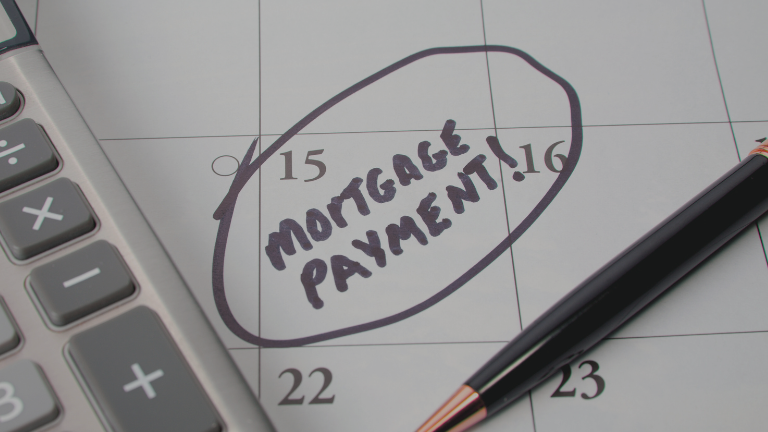
Should I Pay Off My Mortgage Before Retirement

Should I Pay Off My Mortgage Before Retirement?

For generations, owning your home outright has been considered the hallmark of financial success. The American Dream, after all, often ends with a white picket fence and a paid-off house. But as retirement approaches, one big question often comes up: Should I pay off my mortgage before retirement?

Like many financial questions, the answer isn’t one size fits all. It depends on your interest rate, your cash flow, your investments, and just as importantly, your peace of mind. Let’s unpack the numbers, the psychology, and the modern realities behind this age-old debate.

Listen Now: iTunes | Spotify | iHeartRadio | Amazon Music 

The Traditional View: A Paid-Off Home Equals Freedom

For decades, financial advice was straightforward: work hard, buy a house, pay it off, and retire mortgage free. The reasoning made sense. If you own your home outright, that’s one less bill in retirement. Without a mortgage, your monthly expenses drop, freeing up cash for travel, hobbies, or simply living with less financial stress.

And there’s no denying the appeal. Having a home that’s 100% yours can provide a strong sense of security. There’s pride in knowing the roof over your head can’t be taken by a bank or lender.

But the financial landscape has shifted. Low interest rates, rising home values, and new investment opportunities have changed the equation. What once was a clear-cut goal is now a nuanced decision that deserves a closer look.

The Reality: Paid Off Doesn’t Mean Free

Even if you’ve paid off your mortgage, homeownership still comes with ongoing costs. Property taxes, insurance, and maintenance don’t disappear once the bank is out of the picture. In fact, they often increase over time.

Property taxes: As home values rise, so do property tax bills. Many retirees are surprised by how much their annual taxes climb, especially in fast-growing areas.

Insurance: Natural disasters, inflation, and rebuilding costs have driven insurance premiums higher across the country.

Maintenance: From replacing the roof to fixing the HVAC, repairs don’t stop just because the mortgage is gone.

A paid-off home certainly reduces your expenses, but it doesn’t eliminate them. That’s an important distinction when calculating how much income you’ll actually need in retirement.

The Numbers: When It Makes and Doesn’t Make Financial Sense

Let’s look at the math. Suppose you have a $250,000 mortgage at 3% interest, and you’re debating whether to pay it off using part of your investment portfolio, which averages 8 to 10% annual returns.

If you use your portfolio to pay off the mortgage, you’ll save 3% in interest, but you’ll give up the potential to earn 8 to 10% on that same money. That’s a 7% opportunity cost every year.

In simple terms, paying off your mortgage early might give you peace of mind, but it could cost you significantly in long-term growth.

Example:
Mortgage balance: $250,000
Interest rate: 3%
Investment return: 10%

By keeping your mortgage and investing your savings instead, you could earn roughly $70,000 per year in growth (10% of $700,000, for example), while only paying about $7,500 per year in interest. That’s a strong case for not rushing to pay it off.

Of course, this assumes your investments continue to perform well. Markets fluctuate, and returns aren’t guaranteed. That’s why the decision isn’t purely mathematical, it’s also emotional and strategic.

The Psychology: Mind vs. Math

When we talk to clients about this topic, there’s usually a turning point in the conversation: the difference between what feels right and what makes sense on paper.

Some clients say, “I just can’t sleep knowing I owe money.” Others say, “I’d rather have my investments working for me.” Neither mindset is wrong.

Here’s how we break it down:

Mindset-Driven Decision: Paying off the mortgage gives emotional relief and a sense of accomplishment. If eliminating debt provides peace and doesn’t threaten your overall financial health, it can absolutely be worth it.

Math-Driven Decision: Keeping a low-interest mortgage while investing your money elsewhere can lead to higher long-term wealth, especially if your mortgage rate is under 4%.

The key is to align your financial plan with both your numbers and your comfort level. Money decisions are as emotional as they are logical. You can’t separate the two.

Understanding Arbitrage: When Borrowing Is Smart

The word arbitrage simply means taking advantage of the difference between two financial opportunities. In this case, it’s the spread between your mortgage interest rate and your investment return.

If your investments are earning more than your mortgage costs you, you’re effectively making money by keeping the mortgage. For instance:

Mortgage rate: 3%
Investment return: 8%
Net gain: 5%

That’s a win, mathematically speaking. Your money is working harder than the cost of your debt.

This is especially true for homeowners who refinanced during the years of record-low interest rates between 2008 and 2022. Many borrowers locked in mortgages around 2.5% to 3.5%. Paying those off early rarely makes financial sense when your portfolio can reasonably outperform that.

The Tax Angle: Mortgage Interest and Deductions

While the 2017 Tax Cuts and Jobs Act limited some deductions, mortgage interest is still tax deductible for many households. If you itemize deductions, the ability to write off mortgage interest can lower your taxable income, effectively reducing your true borrowing cost even further.

For example, if your mortgage rate is 3.5% but your effective tax benefit brings that down to 2.8%, paying it off early becomes even less compelling financially.

However, tax rules can change, and not everyone benefits equally. It’s best to consult with a financial planner or CPA to see how this impacts your specific situation.

When Paying Off the Mortgage Makes Sense

Despite all the math, there are situations where paying off your home is the smarter move. It comes down to your goals, risk tolerance, and stage of life.

1. High-Interest Mortgage
If your mortgage rate is above 6% or 7%, the math starts to shift. The guaranteed return of eliminating that interest cost may outweigh potential market gains.

2. Lack of Investment Discipline
If you’re unlikely to actually invest the money you would’ve used to pay down your mortgage and would instead let it sit idle, then paying it off can be a productive use of funds.

3. Approaching Retirement with Limited Income Sources
If your pension, Social Security, or savings provide just enough to cover expenses, removing your largest bill can add valuable breathing room.

4. Peace of Mind and Simplicity
Some people simply feel more comfortable owning their home outright. If that emotional security outweighs potential gains, then paying it off can absolutely be the right call.

When It Doesn’t Make Sense

1. You Have a Low Interest Rate
If your mortgage is under 4%, and your investments can reasonably earn more, keeping the loan is usually the better play.

2. You’d Need to Drain Investments
Using a large portion of your retirement savings to pay off a mortgage can weaken your liquidity and reduce your ability to generate income.

3. You’re Early in the Loan Term
Most of your early payments go toward interest, not principal. Accelerating payments doesn’t save as much as you might think unless you’re closer to the end of the loan.

4. Your Portfolio Is Growing Strongly
If your investment accounts are compounding steadily, you’re better off keeping that money in the market rather than locking it into illiquid home equity.

The Hidden Cost of Home Equity

Many retirees proudly say, “We have a million dollars in home equity.” That sounds impressive, but what can you actually do with that equity?

Unless you sell your house or borrow against it, that money is trapped. It doesn’t produce income. It doesn’t pay bills. You can’t use it for groceries, travel, or healthcare expenses.

If you sell your home, you’ll need to buy another one or rent somewhere else, which eats into those proceeds. If you borrow against your equity, you’re right back to having a mortgage payment.

So while home equity absolutely contributes to your net worth, it’s not the same as liquid wealth that can fund your retirement lifestyle. It’s an asset, but not one that easily generates cash flow.

The Downsizing Myth

Another common assumption is that you can just downsize when you retire and live off the difference.

In theory, it sounds great. In reality, it rarely works that way. Most retirees who sell a larger home and buy a smaller one end up spending just as much or more on the new home. Why? They often choose better locations, newer builds, or communities with desirable amenities.

Downsizing may simplify your life, but it doesn’t always free up the financial cushion you might expect.

The Real Question: What’s Best for Your Plan

The goal isn’t simply to own your home. It’s to build a retirement plan that provides security, flexibility, and long-term sustainability.

When deciding whether to pay off your mortgage, consider the following:

  1. Interest Rate vs. Investment Return – What’s the spread between your mortgage rate and your portfolio’s performance

  2. Tax Implications – Are you getting a deduction that reduces your effective interest rate

  3. Cash Flow Needs – Would paying off your home free up significant monthly income

  4. Liquidity – Will you still have accessible funds for emergencies or opportunities

  5. Emotional Satisfaction – Would being debt free improve your peace of mind enough to outweigh any mathematical downside

A good financial plan blends both head and heart. The numbers should make sense, but so should how you feel about them.

Planning for Cash Flow in Retirement

If you enter retirement with a mortgage, the key is ensuring your income sources can comfortably support it. That might mean adjusting withdrawal strategies, timing Social Security benefits strategically, or balancing which accounts you draw from first.

At Bonfire, we run cash flow projections that show how different choices, like paying off a mortgage early versus keeping it, affect your retirement readiness over time. Sometimes, just seeing the numbers on paper brings clarity.

What most clients discover is this: having a mortgage in retirement isn’t a deal breaker. It’s simply another line item to plan around.

The Bottom Line

So, should you pay off your mortgage before retirement?

If you have a low interest rate, strong investment returns, and solid cash flow, keeping your mortgage can make good financial sense. It allows your money to stay invested and growing, giving you more flexibility in the long run.

If your mortgage rate is high or being debt free gives you genuine peace of mind, then paying it off can be equally valid. What matters most is that the decision fits your broader retirement plan, not just a cultural ideal.

Final Thoughts

The dream of a mortgage-free retirement is still alive for many Americans, but it’s no longer the default definition of financial success. The real measure is whether your plan supports the life you want.

A house is part of your story, but it’s not the whole story.

At Bonfire Financial, we help clients look beyond the headlines and build customized strategies that balance math, mindset, and meaning. Whether your goal is a paid-off home, stronger cash flow, or simply a confident retirement, we’ll help you find the right path forward.

Need help deciding whether to pay off your mortgage before retirement?

Schedule a call with our team to run your personalized retirement plan and see what makes the most sense for your future.

Thank You For Your Subscription

You’re in! Thanks for subscribing to our monthly newsletter. We will be sending you market updates, financial insights and inspiring travel ideas soon but in the meantime check out our blog, join us on Instagram or pop over to Pinterest.

Your Appointment Request has been Received

Thank you for reaching out! We are excited to learn more about you. Someone from our team will be in touch shortly.

Sign up now

Join us around the fire for monthly market updates, financial insights and inspiring travel ideas.

.

Sign up now

Receive tips

Give us a call

(719) 394.3900
(844) 295.0069